
Six Questions with Beth Anderson

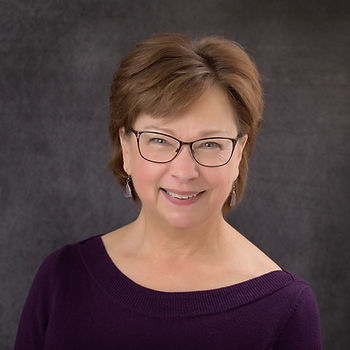
Beth Anderson is the award-winning author of more than ten picture books, including Hiding in Plain Sight, Thomas Jefferson's Battle for Science and Lizzie Demands a Seat. A former educator, she strives for accidental learning in the midst of a great story and hopes to inspire kids to laugh, ponder, and question. Born and raised in Illinois, Beth now lives in Colorado. Want to know more about Beth and her writing projects? Be sure to check out her website. You can also connect with Beth on social media at:
IG: @bandersonwriter
BlueSky: @bandersonwriter
Substack: @bandersonwriter
1. What are some of the key ingredients that make a great book for kids?
For nonfiction, there’s a sweet spot between too much information and too little information which invites readers to invest themselves mentally. Also, an emotional element—WOW! EWW! WHAAAA? HAHA! Oh no! WHY?—that engages. That combination allows a child to be entertained and inspired while finding meaning and connection.
2. What are some ways you approach writing about difficult or complex topics for children?
In The Patriots and the Pox the medical concepts were the most challenging to make comprehensible for young readers: virus, infection, contagion, inoculation, immunity, quarantine. I couldn’t spend a lot of words explaining. They had to be shown through actions, reactions, and word choice. I had to decide how much information was necessary, and also the best sequence for presenting them within the action. The inoculation process involves all the other concepts so those had to be clear first for the reader to understand the dangers and risks. Embedding these concepts in scenes and focusing on consequences for George Washington’s army provided real world understanding.
3. What are some of the best and hardest parts of creating books for kids?
My favorite parts of the entire process are getting to see the first sketches from an illustrator and, of course, sharing the story with kids and seeing their reactions. The hardest part of writing nonfiction is focus. I always see so many valuable ideas to widen kids’ world and inspire critical thinking. The challenge is landing on a “heart” idea that uniquely rings through the topic and offers something to “leave in the reader’s lap” that resonates further.

4. Was The Patriots and the Pox always the title for this project? If not, what other titles did you consider and how did you land on this one?
Oh, titles are so hard, but lucky for me, the final one for this book came pretty quickly. Here are some I jotted down as I wrote:
George Washington’s Mission Impossible
George Washington Battles an Invisible Enemy
With Liberty and Inoculation for All
From Fear and Failure to Freedom
By the first time I took it to my critique group as revision #9, I had landed on The Patriots and the Pox, and the subtitle was just a tweak away. I had eliminated the other possibilities for various reasons such as dull, not kid-friendly, not focused, or not snappy. The final title felt catchy with potential to spark curiosity, and the subtitle had keywords that offered specifics.
5. If you read this book to a room filled with kids, what message would you want them to leave with?
While I want them to leave with a wider understanding of the American Revolution, most of all, I want them to realize the power of critical thinking. Questioning. Cause and effect. Consequences. Sometimes the biggest challenge isn’t what you thought it would be. It took revolutionary thinking to defeat smallpox, which then enabled the patriots to defeat the British. And within Washington’s solution was a much larger idea: becoming a nation required discipline, trust, and unity.
6. As a nonfiction creator, how do you divide your time between research and writing?
Once I think an idea for a story is viable, I dive in: gather info, build a timeline, organize ideas, and ponder how to tell it. (2-4 weeks) After wide exploration settles into a vision for it, I begin drafting and revising, trying to find the storyline, building scenes to create the physical and emotional arcs. The third stage hits when I analyze and tighten. I research for details, missing pieces, connections, and answers to questions—a lot of back and forth with revising and research. Near the end, I go back through research notes looking for accuracy and overlooked details that suddenly have value.
Are you a traditionally published picture book or middle-grade author or illustrator? If you'd like to be featured on this Six Questions blog, please reach out so we can get you scheduled!


Comments